Showing posts with label J Bryan lll. Show all posts

Tuesday, August 18, 2015

1954: Uncle Saint reporting from Fire Island?


    My cousin Katharine and I have every reason to believe the young barefoot reporter seen in this 1954 NBC news footage is our Uncle Saint. The footage is for a story about New Yorker theatre critic Wolcott Gibbs and his weekly summer newspaper The Fire Islander. Gibbs was a friend of Saint's step-father John O'Hara back then ( thus the name "Gibbsville" in so many of O'Hara's stories) and must have known J Bryan III as well. Gibbs even recruited O'Hara and other friends to write for The Fire Islander.


  With literary lions providing much of the copy, it was up to the Gibbs's reporting team to handle the day to day news and Uncle Saint, the former managing editor of The Virginia Spectator at U.VA, appears to be up to challenges like covering trustees meetings.

   In the first issue of The Fire Islander Gibbs promised his readers:

    Our reporters will be instructed to get around. There are usually twenty little communities in any community. It will be their job every week to get in touch with a representative member of each of them and come back with the facts, upon which the editors will them superimpose grammar.

  Why would Gibbs devote so much time to a little read broadsheet?

"I'm in love with the goddamn beach!"

screenshot


Thursday, January 1, 2015

Witty Dotty


  These are photographs of Dorothy Parker and her canine companions that my Grandpa Joe took a year before she died at the age of 73. I found them inside the cover of Sunset Gun, a collection of verses she wrote in 1928.

   No Dorothy Parker biography is complete without the story of how my grandfather first met Parker, the Algonquin wit who wrote "Men seldom make passes At girls who wear glasses". By the mid 1930's she was drinking a lot and even suffering from blackouts. 
     The year was 1933. Joseph Bryan III was a childhood friend of Parker's future husband Alan Campbell. The two ran into each other at a dance in New York.

Alan Campbell and Dorothy Parker

   "Come along at once," Alan said. "Dottie Parker is here and she's dying to meet you."
   Grandpa Joe, then a 29 writer,  followed him to the edge of the dance floor, where Dorothy was holding court. To his amazement, she seemed thrilled to see him. It seemed she couldn't believe her luck in meeting the author of a recent New Yorker profile. She insisted he take a seat next to her. She flooded him with complements and eventually worked up to a proposition: would he be interested in collaborating on a play with her. He said of course he would and they agreed to meet the next morning.  

     The following day, at the stroke of eleven, Grandpa Joe appeared at her hotel and asked the doorman to ring her.

  The following excerpt is from Grandpa Joe's 1985 book Merry Gentlemen (And One Lady):

    She was a long time answering, but finally he said, "Mr. Bryan, madam...Mr Bryan...." He turned to me: "Will you spell it, sir?" I spelled it, and he repeated, " B, R, Y, A, N, madam...Yes, madam." He turned to me again: "Mrs. Parker asks what you wish to see her about." I don't know how I made myself heard over the noise of my heart crackling, but I succeeded, because presently I found myself in the elevator, even though I was already achingly aware that she'd have no recollection of our glittering plans from the evening before. It proved to be worse than that: she had no recollection of it, it never happened.
  I saw Dottie many, many times afterwards...but never once was that first evening ever mentioned. For all that she retained of it, it had never happened.

  When Dorothy Parker died, she willed her ashes and her entire estate to the Dr Martin Luther King Jr. His assassination complicated matters. For 20 years her ashes were kept in a can in the office of a New York lawyer. When columnist Liz Smith made this public in the late 1980s, Grandpa Joe wrote the lawyer, offering to help have the ashes spread over her late husband's grave in a Virginia cemetery:

   God knows I have no desire --none!--to push myself forward in this sad affair, but I can't stand by and let the ashes of a friend and so distinguished a writer be tossed into the street.

 That's not at all what happened. Dorothy Parker's ashes have been placed in a memorial garden at The NAACP headquarters in Baltimore. Her estate has earned the NAACP a great deal of money.


Saturday, December 31, 2011

Grandpa Joe and The Flip Flap Flooler


Grandpa Joe and Eliza Carter, June 30th 1904


Recently I discovered some typed pages that did not make it into my grandfather's memoir, The Sword Over The Mantel. They include stories of a childhood in which he was raised among servants. All of which comes as a surprise to those of us who only knew him as the very regal "Duke of Richmond".


We all lived at Laburnum when I was a child: Grandfather and Grandmother; Father, Mother and I, the three of my four uncles who weren't yet married; and assorted relatives, friends, servants and dogs. The big old house had room for us all, and there was room around it for stables and barns, gardens and orchards, pastures and cornfields, with blackberry bushes for the summer and chinquapin tress for the fall. Only two miles down the road was the city of Richmond, but it held no attraction for me. I was happy and complete at home.

from The Sword Over The Mantel: The Civil War and I published in 1960.


The grounds as seen from Laburnum, now part of the Richmond Memorial Hospital complex.

Now for the parts that did not make it into the book:

In his day a child under six had no business being in the company of adults, so little Joe would spend his days in the kitchen among the cherished company of his friends the house servants:


My mammies, Mammy Liza, and later Mammy Brown, and still later Mammy Liza's daughter, Mary Stubbs--known only as "Mary Dear"(Mary Dear honored me by christening one of her children "Joseph Bryan Third Stubbs."); the cook, Mammy Charlotte Ross; the butler, George Robinson; the parlormaids, Skinker and Lea; Mother's maid, Lily; the butler "Daddy George".

I took my meals downstairs in the basement-kitchen, with the house servants, although as a special treat--on my birthday, say--I'd be allowed to have supper upstairs at the Big Table. Mother told me that just before one such treat, I proudly announced to my usual eating companions, "Tonight, I'm going to eat with the White Folks!"

From table talk he picked up a new phrase that led to a spanking when I heard one of them describe another as 'nothin' but a nappy-headed fiel' han'. I was impatient for an opportunity to use the phrase, although I had no idea what it meant. The opportunity came soon, in the form of Lily, who promptly reported me to Mother, who as promptly gave me six of the best with the back of her hairbrush, It was repousse silver, I remember, and Mother assured me that for hours afterwards my stinging bottom bore the imprint of Cupids and rosebuds.

The chauffeur Johnny Mines, "a tall, handsome Negro who might have been the twin brother to the Cream of Wheat man" was a family favorite.

Everybody liked Johnny , but my brother and I loved him. He taught us to drive a car and to shoot a rifle. More than that, he was our friend and confidant. I was thirteen when I went off to boarding school
(at Episcopal High School) and I stayed so wretchedly homesick for so long that Johnny used to write me letters of comfort. They came in pink envelopes addressed in indelible purple pencil which he would lick before printing each laborious word:

Mister. Joe. Bryan.
Apisabel. High. School.
Alexander. V.A.

When he was in especially high spirits, he would recite a poem about an old Negress going to "de sto'" to buy a palm-leaf fan. She can't make the storekeeper understand what she wants. Finally she tells him in desperation

It's a flip-flap-flooler
Summertime cooler
Good Gawd A-mighty, man
Don't you know?
It's one of 'em things
That goes jes so

Whenever he told us about something that had surprised him, he always said. "Ah say to mahse'f. 'Uh-hi! What dis heah?"

My brother and I still say it, in tribute to Johnny.


Years passed before I purged the Negro locutions from my speech--not all of them; I'm still likely to say, "He don't." But at my worst I was never as ungrammatical as my six-years-younger brother, Lamont. Even up to prep school, he talked like a parody of Amos and Andy.


With important guests in the next room, including a former British Prime Minister, Lamont was heard arguing with his cousin John Stewart ,Jr

"Unc' Stewart," he said hotly, "John Stewart claim Jack Dempsey can lick a gorilla. I claim he ain't!"

Sunday, June 12, 2011

Festering Mutual Understanding


It never occured to Dad not to do military service "A Bryan," his father had told him, " has been an officer in every war this country has fought"--a true statement until Vietnam.


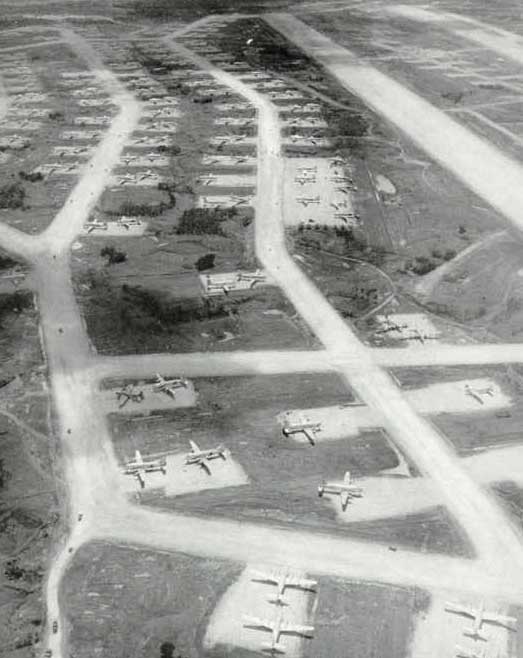
At one point Dad was stationed on Okinawa overlooking on one side the airfield where the torpedo plane in which Grandpa Joe was flying was hit by Japanese Anti-aricraft, and on the other side the bay in which his Uncle Lamont had his destroyer escort sunk out from under him by a kamikaze.


In Korea Dad was a nuclear targeting officer and was given an elaborate scoll of appreciation by the South Korean intelligence in which it said "You have done much to fester mutual understanding between our two nations".

Monday, May 30, 2011

Hanging Out With The Aga Khan


The Aga Khan, a descendent of Ali--the first Imam, and leader of millions of Ismali Muslims

My grandfather, a former associate editor of the Saturday Evening Post, had written profiles of the Duke of Edinburgh, of Kate Hepburn and of Princess Margaret when he moved to France for three months in the early 1950's to work with the Aga Khan on his memoirs.


Inside the Aga Khan's villa in Le Cannet on the French Riviera

Charles Murphy, who co-wrote The Windsor Story with Grandpa Joe, continues the story:


The Aga, who had been President of the League of Nations, fancied himself a world statesman; and his autobiography, as he visualized it, would commemorate his accomplishments as an adroit international negotiator and astute political prophet--this despite his confident reiteration of the late 1930's of the same unfortunate prediction which he had voiced in 1914:the great powers would not fight each other. The Aga's activities in diplomacy proving insufficient to fill out a book, Bryan ventured to suggest that he would command a far wider audience if he were to discourse on his vast acquaintance with fine horses and beautiful women (topics where his authority is beyond dispute), and on the divinity that periodically moved his adoring subjects to match his not inconsiderable weight ( 220 pounds on a 5ft 5 in frame) with its equivalent in jewels and precious metals.


Sir Sultan being weighed in front of a stadium full of onlookers in Mumbai in 1946. The packets making up his weight are full of diamonds, donations which he converted to cash in order to fund charitable endeavors across Asia and Africa.

The Aga said this would be undignified ,and the collaboration dissolved amicably. Bryan explained, "The publishers and I wanted a portrait; the Aga wanted a statue".


The Aga Khan driven by his wife Begum Om Habibeh Aga Khan


The Aga Khan's "statue", World Enough & Time - The Memoirs of Sir Sultan Mohammed Shah, Aga Khan III, was published in 1954 without Grandpa Joe's input. Both he and Charles Murphy ( who had written The Duke's autobiography A King's Story and The Duchess's memoir The Heart Has Its Reasons)would be enlisted by The Duke of Windsor for two books, including a frank account of his miserable childhood. They were never to be written. The Windsor Story, was published in 1979.


Charles Murphy and J Bryan III

Tuesday, April 5, 2011

The Family Firm 1958


Dad was a Cadet 1st Lieutenant enrolled in the R.O.T.C. program at Yale University when he filled out his application to work at the CIA. He was hoping to edit or interpret written data "in a field pertaining to Army matters". His previous job experience included the 1955 summer he spent as a roustabout with Barnum and Bailey Circus and two summers as a handyman at the Block S dude ranch in Elk, Wyoming. Still Dad had reason to hope he'd get the job because both his uncle and father had worked at The Agency.

His uncle was Tracy Barnes, a former war hero who four years earlier managed the covert overthrow of the democratically elected president of Guatamala. In 1961 he was still the "golden boy" of the CIA when he helped plan and oversee the failed Bay of Pigs invasion, an attempt to oust Fidel Castro.

My grandfather ran the Psychological Warfare Workshop at the agency. He hired a bright group, but as Evan Thomas writes in his book The Very Best Men "he seems to have recruited from the Princeton Tiger, his college humor magazine." He brought on board the writer Finis Farr and the legendary practical joker Hugh Troy. One propaganda stunt they come up with was to drop extra large condoms --labeled "medium" in English--on the Soviet Union.

The psywar staff did carry out one memorable propaganda stunt, funding the animated version of George Orwell's Animal Farm (1954). They managed to change the ending of the story to give it a distinctly anti-pig ( and therefore anti Communist) ending. My grandfather helped the CIA buy the rights to Animal Farm by introducing Orwell's widow to Clark Gable.


But if Dad thought he'd have an easy time getting accepted into the family firm, he was sadly mistaken. In P.S. Wilkinson his alter ego takes a lie detector test and "fails" questions about his sexuality. It ends with a physical by a lisping physician.

"You look very young. How old are you?"

P.S. felt the hair rising on the back of his neck. There was something horrible about the man's voice. It's tone. "Twenty-four," P.S. said.

You don't look that old."

A shiver ran through him, and P.S. started to sit down.

No, no!" the doctor protested. "Don't sit down yet. Let me look at you."

P.S. remained standing where he was. His skin felt cold and damp.

"My, you're tall?" the doctor said. "Are you long all over?"

Monday, March 7, 2011

Mission Beyond Darkness, 1945


This print by renowned aviation artist Robert Taylor is one of many that can be found at www.roberttaylorprints.com


At the end of the First Battle of the Philippines, on June 19, 1944, United States Navy planes from Task Force 58 attacked a Japanese fleet. They sank at least one carrier and four tankers and damaged several other ships. Our losses were ninety six planes and forty nine men.

The attack occurred late in the afternoon amid a barrage of such intense anti-aircraft fire the ships below appeared to be on fire. From out of the clouds came a horde of Japanese fighter planes. Those who survived enemy retaliation then faced their greatest challenge: returning to that little sliver of home that is a carrier flight deck, in darkness, while running out of fuel.
Sixty four men took off in thirty four planes from Group 16's flagship, the USS Lexington.The book my grandfather wrote with Philip Reed, Mission Beyond Darkness, is an account derived wholly from statements by the survivors.


On that moonless night, Admiral Marc A Mitscher broke with protocol and had every ship in his task force switch on their lights to guide the planes home. So heavy was the stampede to the landing strips, plenty of exhausted pilots had little choice but to ditch.
Not all of them ditched within sight of the ships.
After cartwheeling in the waves 22 year old Ensign Edward Wendorf came to consciousness to find himself upside down in a Hellcat filling up with water. He managed to kick himself away from the sinking plane and into a raft. Filled with nausea from all the fuel he swallowed, he caught sight of something afloat.

From Mission Beyond Darkness:

The vague object drifted closer. It's a piece of wreckage from my plane, that's what! Soon it was close enough to touch. He was about to reach for it when he saw that it was moving. It was a shark. Another followed it, and another.
Wendorf became a madman. He pounded the water with his shoe, then threw it at them, screaming and cursing. The fins glided off, but turned and came back until they were three feet away. His screaming made him retch again, and his retching upset the raft tilt. He was terrified that it would upset, or that the sharks would puncture it and sink it. He thought of his pistol. The next thing that moved, he shot at. He fired eight times before nausea overwhelmed him again, and when the spasm passed, the sharks had disappeared...
He curled up and tried to sleep.
It'll be dawn soon.
Dawn was six hours away...


Though nine planes were lost all but four men survived. That was due in part to Admiral Mitscher's decision. He had brought thousands of men and a billion dollars worth of ships into enemy waters. He knew if he lit up the ships any Japanese torpedo plane or bomber or submarine in the area could hardly miss.
On the other hand, the prospect of several hundred planes fumbling for those narrow decks in the dark meant sure catastrophe.


Vice Admiral Marc Mitscher

It's important to note Mission Beyond Darkness was published in 1945, a war time book. It was produced in full compliance with the Government and was even printed with a seal of a bald eagle holding a ribbon that read "Books are weapons in the war of ideas."
After writing this book, Grandpa Joe worked for the Central Intelligence Agency with a concurrent commission as lieutenant colonel in the air force, giving him the unusual distinction of having been an officer in all three major branches of the armed services.

Monday, January 31, 2011

The Irritants of Grandpa Joe , 1986-1989


My grandfather collected trivia, curios and exotica. He enjoyed the astounding, the bizarre, the offbeat and the occasionally bawdy. In his eighties, he wrote these tidbits down in two collections.


Time Magazine said of Hodgepodge, published in 1986, "the covers of this one are too close together".


So he followed it up in 1989 with Hodgepodge Two aka Gallimaufry To Go.


Among the curious data he offered ( The Dallas Zoo has two yaks, Yack and Yill), he added a chapter in each entitled Irritants.


The Duke of Richmond had little patience for the foolish and the petty. He preferred to live his life as it was meant to be lived. In the Victorian Era.


Among the irritants he listed:


- Clip-on coat hangers in hotel closets, silently implying that the guest is a thief.


- Waiters and waitresses who tell you their names.


- Clowns in the background of a TV news film who lean into the camera and make faces and wiggle their fingers in their ears.


-Idiots who call you early in the morning and ask in astonishment, "Oh did I wake you?"


-Vogue words and phrases such as gutsy, state of art, flight attendant for stewardess, and all other such pretentiousness, pilot error, ball park figure (meaning a rough estimate in round numbers, whereas real ball-park figures are exact: "Attendance today was 31, 449")


-Modern packaging, which requires an ax and a blowtorch to open the box or envelope--e.g., the salted nuts they give you on airplanes.


Even the grand-apple does not fall far from the tree so I feel I must add my own irritants:


-Snapping chewing gum within hearing distance of any other human being.

-Bank tellers, cashiers and airline ticket takers who insist on calling you by your first name ( which in my case is Joseph, or even worse, Joe).

-Duck boats and duck boat horns in the hands of anyone who has disembarked from a duck boat.
-Waiters who always point to the most expensive thing on the menu when you ask them what's good.

-Drivers who slam the brakes on an interstate to watch a paper cup drift by.

-"Kiddos"


-And I don't care much for the goons who shout things and make faces during live TV reports either.

Monday, October 11, 2010

Grandpa Joe: The Duke of Richmond 1904-1993

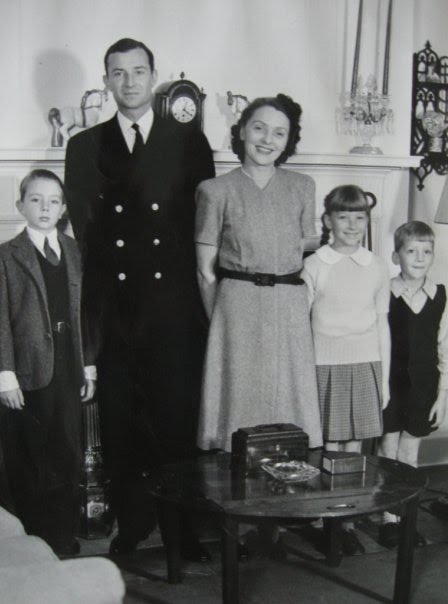
St George Bryan II, J Bryan III, Katharine L Bryan , Joan Bryan , CDBB
FROM ENCYCLOPEDIA VIRGINIA

Joseph Bryan was a journalist and writer who was born into the influential Bryan family of newspaper publishers and industrialists. He edited and wrote for many national publications, including the family-ownedRichmond News LeaderandChicago Daily Journal, as well as Parade, Time, Fortune, Town and Country, Reader's Digest, the Saturday Evening Post, and the New Yorker. He wrote numerous articles on travel, humor, and celebrities, some of which evolved into books or reappeared as portions of his books. He served in all three branches of the U.S. military: first as a lieutenant in the field artillery of the army following his graduation from Princeton University in Princeton, New Jersey, then in the navy during World War II (1939–1945) as a lieutenant commander assigned to naval air combat intelligence in the Pacific, and later as a lieutenant colonel in the air force. He also worked for the Central Intelligence Agency from the late 1940s until 1953. He lived in Washington, D.C., and at Brook Hill, an ancestral home in Henrico County.

Joseph Bryan was born on April 30, 1904, at Laburnum in Henrico County, the son of Joseph St. George Bryan and Emily Nelson Page Kemp Bryan and a grandson of the preservationist Isobel Lamont Stewart Bryan and of the Richmond industrialist and newspaper publisher Joseph Bryan (1845–1908). Known as Joseph Bryan III throughout his life, Bryan was educated successively at Chamberlayne School (later St. Christopher's School) in Richmond, Episcopal High School in Alexandria, and Princeton University, where he earned a BA in 1927. He edited Princeton's humor magazine, the Princeton Tiger, and was voted most entertaining and most witty man in his class and runner-up for best-dressed man and best-all-around man outside athletics.

Following graduation Bryan and several friends toured Europe, Africa, the Middle East, and India. From 1928 to 1930 he worked as a reporter and editorial writer for the Richmond News Leader and the Chicago Daily Journal, both published by his uncle John Stewart Bryan. The Great Depression made earning a living as a freelancer difficult and forced Bryan into frequent job changes. He was associate editor of Parade magazine in Cleveland in 1931 and 1932, then worked briefly for Time, Fortune, and the New Yorker, and from 1933 to 1937 was managing editor of Town and Country. From 1937 until he resigned in June 1940 Bryan was an associate editor of the Saturday Evening Post.

As a result of his Reserve Officers' Training Corps work at Princeton, Bryan held a commission as a second lieutenant and then lieutenant in the field artillery for several years following his graduation. In January 1942 he was commissioned a lieutenant commander in the navy and assigned to naval air combat intelligence in the Pacific. Reassigned to naval public relations in 1944, Bryant spent much of 1945 aboard the carrier U.S.S. Yorktown. From the late 1940s until 1953 he worked for the Central Intelligence Agency with a concurrent commission as lieutenant colonel in the air force, giving him the unusual distinction of having been an officer in all three major branches of the armed services. In 1953 Bryan was promoted to colonel in the air force reserve. He lived in Washington during World War II and until 1959, when through a complicated family trust he inherited the right to live at Brook Hill, an ancestral home in Henrico County.

As J. Bryan III he wrote about three dozen articles for Collier's, Reader's Digest, the Saturday Evening Post, and the Saturday Review of Literature during the 1930s and 1940s. After leaving government service he resumed his career as a freelance writer. From 1953 through 1974 Bryan wrote about fifty articles for Holiday magazine and numerous pieces for other journals. Other pieces Bryan published in national magazines included biographical works on the Aga Khan, the duke of Edinburgh, Britain's Princess Margaret, and Katharine Hepburn, and in 1965 he wrote a biography of John Armstrong Chaloner for the Virginia Magazine of History and Biography. His only work of fiction, a short story entitled "First Patrol," appeared in Esquire in 1956.

Bryan's principal books included Mission Beyond Darkness (1945), written with Philip Reed about the U.S.S. Lexington in the South Pacific; Admiral Halsey's Story (1947), an authorized biography written with William F. Halsey; Aircraft Carrier (1954), based on a diary Bryan kept while aboard the U.S.S. Yorktown; The World's Greatest Showman: The Life of P. T. Barnum (1956), written for young readers; and The Windsor Story (1979), a dual biography of the duke and duchess of Windsor, written with Charles J. V. Murphy. He also published two volumes of short writings. The Sword over the Mantel: The Civil War and I (1960) features reminiscences and character sketches derived from his youth in Richmond, and Merry Gentlemen (And One Lady) (1985) contains memorable pen portraits of Fred Allen, Robert Benchley, Dorothy Parker, and other personalities of the Algonquin Round Table who flourished during Bryan's years in New York. His last two books, Hodgepodge: A Commonplace Book (1987) and Hodgepodge Two: Another Commonplace Book (1989), reflect his omnivorous reading, his love of travel, and his sense of humor.

Bryan married three times. On October 4, 1930, he married Katharine Lansing Barnes, of New York. They had two sons and one daughter and were divorced in 1954. On February 22, 1960, Bryan married a widow, Jacqueline Vandesmet, viscountess Guy de La Grandière, of Paris. She died on March 8, 1988, and August 28, 1991, he married Elizabeth Mayo Atkinson McIntosh, of Richmond. Joseph Bryan III died of cancer at his home in Richmond on April 3, 1993, and was buried with other family members in the yard of Emmanuel Episcopal Church in Henrico County.

Major Works
•Mission Beyond Darkness (1945), written with Philip Reed
•Admiral Halsey's Story (1947)
•Aircraft Carrier (1954)
•The World's Greatest Showman: The Life of P. T. Barnum (1956)
•The Windsor Story (1979), written with Charles J. V. Murphy
•The Sword over the Mantel: The Civil War and I (1960)
•Merry Gentlemen (And One Lady) (1985)
•Hodgepodge: A Commonplace Book (1987)
•Hodgepodge Two: Another Commonplace Book (1989)
Time Line
April 30, 1904 - Joseph Bryan (also known as Joseph Bryan III) is born at Laburnum in Henrico County.
1927 - Joseph Bryan III graduates from Princeton University. While there, he edited Princeton's humor magazine, the Princeton Tiger.
1928–1930 - Joseph Bryan III works as a reporter and editorial writer for the Richmond News Leader and the Chicago Daily Journal, both published by his uncle John Stewart Bryan.
October 4, 1930 - Joseph Bryan III marries Katharine Lansing Barnes, of New York. The couple will have two sons and one daughter but divorce in 1954.
1931–1932 - Joseph Bryan III is an associate editor of Parade magazine in Cleveland, Ohio.
1933–1937 - Joseph Bryan III is managing editor of Town and Country.
1937–June 1940 - Joseph Bryan III is an associate editor of the Saturday Evening Post.
January 1942 - Joseph Bryan III is commissioned a lieutenant commander in the navy and assigned to naval air combat intelligence in the Pacific.
1944 - Joseph Bryan III is reassigned to naval public relations.
1945 - Joseph Bryan III spends much of the year aboard the carrier USS Yorktown.
Late 1940s–1953 - Joseph Bryan III works for the Central Intelligence Agency with a concurrent commission as lieutenant colonel in the air force.
1953 - Joseph Bryan III is promoted to colonel in the air force reserve.
1953–1974 - Joseph Bryan III writes about fifty articles for Holiday magazine and numerous pieces for other journals.
1956 - Joseph Bryan III's only work of fiction, a short story entitled "First Patrol," appears in Esquire.
1959 - Joseph Bryan III moves from Washington D.C. to Brook Hill, an ancestral home in Henrico County.
February 22, 1960 - Joseph Bryan III marries a widow, Jacqueline Vandesmet, viscountess Guy de La Grandière, of Paris.
March 8, 1988 - Joseph Bryan III's second wife, Jacqueline Vandesmet, viscountess Guy de La Grandière, dies.
August 28, 1991 - Joseph Bryan III marries Elizabeth Mayo Atkinson McIntosh, of Richmond.
April 3, 1993 - Joseph Bryan III dies of cancer at his home in Richmond and is buried with other family members in the yard of Emmanuel Episcopal Church in Henrico County.

New York Times Obit

Joseph Bryan 3d, 88, an Author
By MARVINE HOWE
Published: April 06, 1993

Print

Joseph Bryan 3d, an author and editorial writer, died on Saturday at his home, Brook Hill, in Richmond. He was 88.

The cause was cancer, said his wife, Elizabeth Mayo Atkinson McIntosh.

As a lieutenant commander in air-combat intelligence in the United States Navy in World War II, Mr. Bryan saw action in the Southwest Pacific, the South Pacific and the Central Pacific.

His best known book, "Mission Beyond Darkness" (1945), written with Philip Reed, is a dramatic account of the events and emotions experienced by the gunners and pilots of Air Group 16 aboard the aircraft carrier Lexington in the first battle of the Philippines.

Another account of action in the Pacific, "Admiral Halsey's Story" (1947), written with Adm. William F. Halsey, first appeared as a series in The Saturday Evening Post. Mr. Bryan's "Aircraft Carrier" (1954) is a record of life aboard the carrier Yorktown from January through April 1945.

His last work, "Hodge Podge Two" (1989), is a collection of observations and quotations. Other books include "The Windsor Story" (1979), about the Duke and Duchess of Windsor.