Showing posts with label family history. Show all posts

Tuesday, February 22, 2011

Aircraft Carrier, March 18, 1945


"This is one of the best stories of the human side of shipboard life during war conditions that has been published, Every good American should read it. To the wartime sailor it will bring back vivid memories. To those who know little about shipboard life, it will afford a chance to renew their faith and pride in the U.S. Navy".--Admiral William F. Halsey


My grandfather's book, Aircraft Carrier, published in 1954, is based on a diary he kept on board "The Fighting Lady"--the U.S.S. Yorktown. Through four months of action in the Pacific in 1945, he sailed on the Essex Class aircraft carrier as it moved out on an enormous strike against the Japanese homeland.


The Japanese , of course, tried to strike back.
On March 18th three "judy" dive bombers launched attacks on the carrier. Two were shot down, but the third planted his bomb on the signal bridge. It passed through the first deck and exploded near the ship's hull, puncturing the ship's side with two large holes, killing five men and wounding another 26.


>In Grandpa Joe's words:


"The bomb burst directly below (chaplian) Joe Moody's battle station--Repair 3, a small shop at the after end of the island. As soon as Joe heard the explosion, he dashed out onto the flight deck. A Marine in the 20mm gallery around the corner was rubbing his bloody eyes and screaming. Nest to him, another Marine was trying to stanch a jet of blood from his leg. Joe grabbed a stretcher, commandeered three corpsmen, and rushed the blind man toward Battle Dressing 1, at the forward end of the island. On the way, they passed a sailor who pointed to the clipping room and shouted, "Bad ones up there, Father! A lot of 'em!"


(Among the wounded was a radio technician whose body was riddled with bomb fragments.)

Joe began to wash him down. Presently the man asked, "Father, what are you spending so much time with me for?"
Joe asked, "Are you a Catholic?"
"Not too good a one."
"Well, " Joe said, "we won't worry about that now."
A little later the man said, "I'll tell you a funny thing, Father: I'm glad this happened to me. I'm completely at peace with God for the first time in my life."
Shortly after midnight he repeated it: "I'm glad this happened to me. It's made it easy for me to do what I've been wanting to do for a long time--be a part of the Church."
Those were his last words.


It made me think of a stanza from a Scottish ballad I once read:


"Fight on my men!" Sir Andrew said.
"A little I'm hurt but not yet slain.
"I'll but lie down and bleed awhile,
"And then rise up and fight again."


The Yorktown remained fully operational. Her anti aircraft guns shot down the third plane.

At wartime, there were official regulations against naval diaries, but Grandpa Joe was given special permission for a diary. In fact he was instructed to keep one, for a reason "no longer of interest" as he put it. The fact that nobody but Grandpa Joe could read his scrawl must have provided comfort to the High Command. At the time J Bryan lll was 40 years old and a lieutenant commander in the Naval Reserve.


Today The U.S.S. Yorktown is a museum ship, anchored at Patriot's Point in Mount Pleasant, SC. I've visited the ship a few times for pleasure and business. Just a mile from the Yorktown, I had a job at my first television station, WCBD-TV.


Wednesday, February 9, 2011

On Being "Joan", 1983


Ernest Hemingway's The Sun Also Rises.
Hunter S Thompson's Fear and Loathing in Las Vegas
and dad's Beautiful Women, Ugly Scenes.
What do these three novels have in common? They are all examples of what the french literary types call Roman A Clef ( "Novel With a Key").
Most novels are based, at least in some parts, on an author's experiences.
The difference here is that, while all characters are fictitious, with "a key" the reader could match each characters to someone real.
I'm not about to reveal this so called key to Beautiful Women, Ugly Scenes except for one. The sullen teenage daughter Joan is a composite of my sister, Lansing, and me. And it's not brotherly love but honesty which compels me to admit Joan is a lot more me than she.
In this passage the narrator is driving his daughter to her first day of boarding school. She has left her raincoat somewhere and just called her friend's house.

"Did she have your raincoat?"
"Unk!" Joan said and her face flushed. "I forgot to ask her."
"Call Annie again, " I said. "Now watch my lips: ask about your raincoat".


The raincoat was not there; it never has been found. Nor have the countless sweaters, gloves, scarves, her bicycle lock, my bicycle lock, her bicycle itself, two Timex watches, library books. If I did not know that I had been mindless at her age, too, I would have savaged her. Instead, I sat quietly in the car next to her as we drove up to St Matthew's and kept my worries to myself. She was so young. At thirteen could I have been as immature? She is still such an unformed cloud of astral gases that I have never satisfactorily resolved for myself how much of it is my fault
.


The Roman a Clef format allows the author to play God with the people he knows. He can change what people say and what people do. He can settle scores. He can make fun. He can even manufacture a happy ending. I don't think this is what Dad set out to do. In a confessional tone, I think he set out honestly explain his relationships with the women in his life.

For so many reasons this book is a difficult read for me personally. I wasn't much of a prize at thirteen ( through eighteen), but the years Dad describes in this book are among the most painful of my life. I don't need to revisit them again.

Some critics thought better of the book.


The New York Times critic Michiko Kakutani called it "unwieldy,opaque, but (as a) portrait of a man and his collapsing marriage also powerful and disturbing".

Tom Wolfe said Beautiful Women, Ugly Scenes is "the most exquisitely detailed picture of the psychological water polo that passes for modern marriage that I've ever read. A brilliant piece of work".

People Magazine said it was "so vivid it almost gives off sparks"

But they weren't all kind

The Washington Post's Jonathan Yardley called the book "silly" and added "Every page aches with confession and throbs with sincerity; there's more caring, loving, openness and warmth here than could be found in a convention of Southern California interpersonal-relationship counselors."

The nail in the coffin came in the New York Times Book Review where novelist Alice Adams wrote how Dad seemed obsessed with breasts and added ''this is a very confused long book.''

Beautiful Women Ugly Scenes failed to take off. Dad gave up writing novels and moved on to non-fiction exclusively, beginning with The National Geographic Society: 100 Years of Adventure and Discovery.

Thank God Hollywood didn't come calling again!

Wednesday, January 12, 2011

Phoebe Miller Bryan 1938-2010


In her final days, my mother was surrounded by three generations of family who filled her small house with love, laughter and many, many tears.
Her adult life wasn't easy, which must have seemed incredibly unfair to the little girl inside. That girl had a mostly idyllic childhood in Camden, South Carolina.
Her father owned and trained Elkridge, one of the greatest steeple chasers in racing history.

My mom could do anything she wanted in Camden.
She won ribbons riding horses
She won trophies playing tennis.
She danced with beaus at cotillions
She lived in a huge house called Cool Springs.
She attended private schools with the town's richest children.
There was just one problem.
One day the money was gone.

What happened to the money isn't so clear but soon, it became obvious that the Millers would have to pull all their children out of their private schools. Mom would no longer go to school with the friends she met at horse shows, the dances and the tennis courts.
Perhaps not a big deal in a northern city, but in a small Southern town, it made all the difference.
On the public school bus, this little blond girl must have been steaming. It wasn't her fault the family had run out of money so why should she suffer?
When the bus stopped in front of her new school, Mom stepped down and began running. She ran past her brother and sister and raced down the street. She ran past the shops and past the library. She ran right up to the door of the private school, took a breath and swung the door open. There was nobody in the hallways so she walked straight back into her old classroom. She sat down at her old desk. She stared hard at the teacher just daring her to say something.
Nobody did.
Mom got to finish that school year at the private school

For Mom, money would always be an issue. Even after a divorce settlement considered generous by her own lawyer, she lived , in the best of times, paycheck to paycheck.
Lansing and I would live with our Dad in a New England saltbox with a swimming pool in a big backyard.
Then we'd live with Mom in small rental home with an old dodge dart in the driveway. There, in Sparks, Nevada, we qualified for a program that let us buy school lunches for 35 cents.

In our teens, we went to boarding schools with children whose families were among the richest in the nation.
Then we'd spend summers eating peanut butter sandwiches and working minimum wage jobs at casinos or restaurants.
(We had it easy compared to the miracle of our family, my sister Alyssa.)
Throughout it all, even in the worst of times, Mom had pluck.
After her memorial service, I visited her musty basement. In the corner I found an old Wilson tennis racket. On the handle she had stenciled two words.
CONCENTRATE.
ATTACK.

The little girl inside ,who could do anything she tried, would speak to her now and then.
After decades breathing in second hand smoke while dealing cards at Circus Circus,
Mom quit that miserable job and went back to school.
She graduated from the University of Nevada.
She bought a house across the street from campus.
That steel magnolia quality saw her through several bouts with cancer.
She fought even after her body gave out.
My God, she was so angry at her legs when they wouldn't let her get out of bed.
And I believe that spirit lives on.
Not just in the little house where tenants swear they hear someone playing a piano.
But in my own daughter, a competitive ball of fire named for the town my mom always thought of as home.
The night mom died, Camden says someone was in her room.
I'd like to think it was mom delivering two words of advice:
CONCENTRATE.
ATTACK.
I love you Mom and miss you more than I ever would have dreamed.

Sunday, January 9, 2011

The Sword Over the Mantel, 1960


My grandfather was born in Richmond and brought up in the former capital of the Confederate States. The city's atmosphere was still that capital's in the early 1900's of his childhood.
As a child he would be lifted to the deep window sill beneath the library wall. There, beneath a sword that once belonged to General Robert E. Lee he'd perform the following poem:

Forth from its scabbard pure and bright,
Flashed the sword of Lee!
Far in the front of the deadly fight
High o'er the brave in the cause of Right
Its stainless sheen like a beacon of light
Led us to victory


He grew up in a huge home, Laburnum, with his grandfather and grandmother, his father and mother; three of his four uncles who were not yet married and assorted relatives, friends, servants and dogs. He is seen to the left, standing with his seated cousin, Thomas Pinckney, in a photgraph dated 1917.

His grandfather, Joseph Bryan, fought as a private with Colonel Mosby's Rangers. He was injured twice.
Mosby told his men "I will tolerate no blasphemy or profanity in my command under any circumstances but one: I permit you to call, 'Surrender, you Yankee son of a bitch!'"

His Great-uncle Ran was a ballonist. General Joe Johnston sent him a hundred feet above the treetops to spy on Yankee positions. His adventures are worthy of a future post. Historian Burke Davis wrote a book about them called Runaway Balloon.


My grandfather's most colorful uncle was St George Tucker Coalter Bryan, nicknamed Teasey ( or "T.C" for his middle initials). After the war in which he served as an artilleryman with 2nd Company, Richmond Howitzers, Teasey went west and lived among the Zuni indians, sharing a hut with a gold-miner and a wrestling bear. Thirty years of this cooled him down, and he came back to Virginia. He is the first man on the left of this photograph. Joseph Bryan is standing on the far right.


And finally there is one more great-uncle, Capt. Thomas Pinckney. He had starved as a Yankee prisoner at Morris Island outside Charleston, SC. He once told my grandfather offhandedly, "You get used to them after a while, son. Rats don't taste all that bad".
All of these stories, and many more, are told in my grandfather's 1960 memoir, The Sword Over the Mantel: The Civil War and I


Monday, October 11, 2010

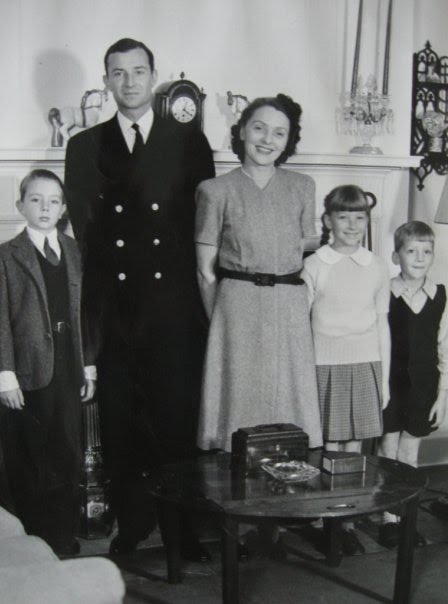
Grandpa Joe: The Duke of Richmond 1904-1993

St George Bryan II, J Bryan III, Katharine L Bryan , Joan Bryan , CDBB
FROM ENCYCLOPEDIA VIRGINIA

Joseph Bryan was a journalist and writer who was born into the influential Bryan family of newspaper publishers and industrialists. He edited and wrote for many national publications, including the family-ownedRichmond News LeaderandChicago Daily Journal, as well as Parade, Time, Fortune, Town and Country, Reader's Digest, the Saturday Evening Post, and the New Yorker. He wrote numerous articles on travel, humor, and celebrities, some of which evolved into books or reappeared as portions of his books. He served in all three branches of the U.S. military: first as a lieutenant in the field artillery of the army following his graduation from Princeton University in Princeton, New Jersey, then in the navy during World War II (1939–1945) as a lieutenant commander assigned to naval air combat intelligence in the Pacific, and later as a lieutenant colonel in the air force. He also worked for the Central Intelligence Agency from the late 1940s until 1953. He lived in Washington, D.C., and at Brook Hill, an ancestral home in Henrico County.

Joseph Bryan was born on April 30, 1904, at Laburnum in Henrico County, the son of Joseph St. George Bryan and Emily Nelson Page Kemp Bryan and a grandson of the preservationist Isobel Lamont Stewart Bryan and of the Richmond industrialist and newspaper publisher Joseph Bryan (1845–1908). Known as Joseph Bryan III throughout his life, Bryan was educated successively at Chamberlayne School (later St. Christopher's School) in Richmond, Episcopal High School in Alexandria, and Princeton University, where he earned a BA in 1927. He edited Princeton's humor magazine, the Princeton Tiger, and was voted most entertaining and most witty man in his class and runner-up for best-dressed man and best-all-around man outside athletics.

Following graduation Bryan and several friends toured Europe, Africa, the Middle East, and India. From 1928 to 1930 he worked as a reporter and editorial writer for the Richmond News Leader and the Chicago Daily Journal, both published by his uncle John Stewart Bryan. The Great Depression made earning a living as a freelancer difficult and forced Bryan into frequent job changes. He was associate editor of Parade magazine in Cleveland in 1931 and 1932, then worked briefly for Time, Fortune, and the New Yorker, and from 1933 to 1937 was managing editor of Town and Country. From 1937 until he resigned in June 1940 Bryan was an associate editor of the Saturday Evening Post.

As a result of his Reserve Officers' Training Corps work at Princeton, Bryan held a commission as a second lieutenant and then lieutenant in the field artillery for several years following his graduation. In January 1942 he was commissioned a lieutenant commander in the navy and assigned to naval air combat intelligence in the Pacific. Reassigned to naval public relations in 1944, Bryant spent much of 1945 aboard the carrier U.S.S. Yorktown. From the late 1940s until 1953 he worked for the Central Intelligence Agency with a concurrent commission as lieutenant colonel in the air force, giving him the unusual distinction of having been an officer in all three major branches of the armed services. In 1953 Bryan was promoted to colonel in the air force reserve. He lived in Washington during World War II and until 1959, when through a complicated family trust he inherited the right to live at Brook Hill, an ancestral home in Henrico County.

As J. Bryan III he wrote about three dozen articles for Collier's, Reader's Digest, the Saturday Evening Post, and the Saturday Review of Literature during the 1930s and 1940s. After leaving government service he resumed his career as a freelance writer. From 1953 through 1974 Bryan wrote about fifty articles for Holiday magazine and numerous pieces for other journals. Other pieces Bryan published in national magazines included biographical works on the Aga Khan, the duke of Edinburgh, Britain's Princess Margaret, and Katharine Hepburn, and in 1965 he wrote a biography of John Armstrong Chaloner for the Virginia Magazine of History and Biography. His only work of fiction, a short story entitled "First Patrol," appeared in Esquire in 1956.

Bryan's principal books included Mission Beyond Darkness (1945), written with Philip Reed about the U.S.S. Lexington in the South Pacific; Admiral Halsey's Story (1947), an authorized biography written with William F. Halsey; Aircraft Carrier (1954), based on a diary Bryan kept while aboard the U.S.S. Yorktown; The World's Greatest Showman: The Life of P. T. Barnum (1956), written for young readers; and The Windsor Story (1979), a dual biography of the duke and duchess of Windsor, written with Charles J. V. Murphy. He also published two volumes of short writings. The Sword over the Mantel: The Civil War and I (1960) features reminiscences and character sketches derived from his youth in Richmond, and Merry Gentlemen (And One Lady) (1985) contains memorable pen portraits of Fred Allen, Robert Benchley, Dorothy Parker, and other personalities of the Algonquin Round Table who flourished during Bryan's years in New York. His last two books, Hodgepodge: A Commonplace Book (1987) and Hodgepodge Two: Another Commonplace Book (1989), reflect his omnivorous reading, his love of travel, and his sense of humor.

Bryan married three times. On October 4, 1930, he married Katharine Lansing Barnes, of New York. They had two sons and one daughter and were divorced in 1954. On February 22, 1960, Bryan married a widow, Jacqueline Vandesmet, viscountess Guy de La Grandière, of Paris. She died on March 8, 1988, and August 28, 1991, he married Elizabeth Mayo Atkinson McIntosh, of Richmond. Joseph Bryan III died of cancer at his home in Richmond on April 3, 1993, and was buried with other family members in the yard of Emmanuel Episcopal Church in Henrico County.

Major Works
•Mission Beyond Darkness (1945), written with Philip Reed
•Admiral Halsey's Story (1947)
•Aircraft Carrier (1954)
•The World's Greatest Showman: The Life of P. T. Barnum (1956)
•The Windsor Story (1979), written with Charles J. V. Murphy
•The Sword over the Mantel: The Civil War and I (1960)
•Merry Gentlemen (And One Lady) (1985)
•Hodgepodge: A Commonplace Book (1987)
•Hodgepodge Two: Another Commonplace Book (1989)
Time Line
April 30, 1904 - Joseph Bryan (also known as Joseph Bryan III) is born at Laburnum in Henrico County.
1927 - Joseph Bryan III graduates from Princeton University. While there, he edited Princeton's humor magazine, the Princeton Tiger.
1928–1930 - Joseph Bryan III works as a reporter and editorial writer for the Richmond News Leader and the Chicago Daily Journal, both published by his uncle John Stewart Bryan.
October 4, 1930 - Joseph Bryan III marries Katharine Lansing Barnes, of New York. The couple will have two sons and one daughter but divorce in 1954.
1931–1932 - Joseph Bryan III is an associate editor of Parade magazine in Cleveland, Ohio.
1933–1937 - Joseph Bryan III is managing editor of Town and Country.
1937–June 1940 - Joseph Bryan III is an associate editor of the Saturday Evening Post.
January 1942 - Joseph Bryan III is commissioned a lieutenant commander in the navy and assigned to naval air combat intelligence in the Pacific.
1944 - Joseph Bryan III is reassigned to naval public relations.
1945 - Joseph Bryan III spends much of the year aboard the carrier USS Yorktown.
Late 1940s–1953 - Joseph Bryan III works for the Central Intelligence Agency with a concurrent commission as lieutenant colonel in the air force.
1953 - Joseph Bryan III is promoted to colonel in the air force reserve.
1953–1974 - Joseph Bryan III writes about fifty articles for Holiday magazine and numerous pieces for other journals.
1956 - Joseph Bryan III's only work of fiction, a short story entitled "First Patrol," appears in Esquire.
1959 - Joseph Bryan III moves from Washington D.C. to Brook Hill, an ancestral home in Henrico County.
February 22, 1960 - Joseph Bryan III marries a widow, Jacqueline Vandesmet, viscountess Guy de La Grandière, of Paris.
March 8, 1988 - Joseph Bryan III's second wife, Jacqueline Vandesmet, viscountess Guy de La Grandière, dies.
August 28, 1991 - Joseph Bryan III marries Elizabeth Mayo Atkinson McIntosh, of Richmond.
April 3, 1993 - Joseph Bryan III dies of cancer at his home in Richmond and is buried with other family members in the yard of Emmanuel Episcopal Church in Henrico County.

New York Times Obit

Joseph Bryan 3d, 88, an Author
By MARVINE HOWE
Published: April 06, 1993

Print

Joseph Bryan 3d, an author and editorial writer, died on Saturday at his home, Brook Hill, in Richmond. He was 88.

The cause was cancer, said his wife, Elizabeth Mayo Atkinson McIntosh.

As a lieutenant commander in air-combat intelligence in the United States Navy in World War II, Mr. Bryan saw action in the Southwest Pacific, the South Pacific and the Central Pacific.

His best known book, "Mission Beyond Darkness" (1945), written with Philip Reed, is a dramatic account of the events and emotions experienced by the gunners and pilots of Air Group 16 aboard the aircraft carrier Lexington in the first battle of the Philippines.

Another account of action in the Pacific, "Admiral Halsey's Story" (1947), written with Adm. William F. Halsey, first appeared as a series in The Saturday Evening Post. Mr. Bryan's "Aircraft Carrier" (1954) is a record of life aboard the carrier Yorktown from January through April 1945.

His last work, "Hodge Podge Two" (1989), is a collection of observations and quotations. Other books include "The Windsor Story" (1979), about the Duke and Duchess of Windsor.