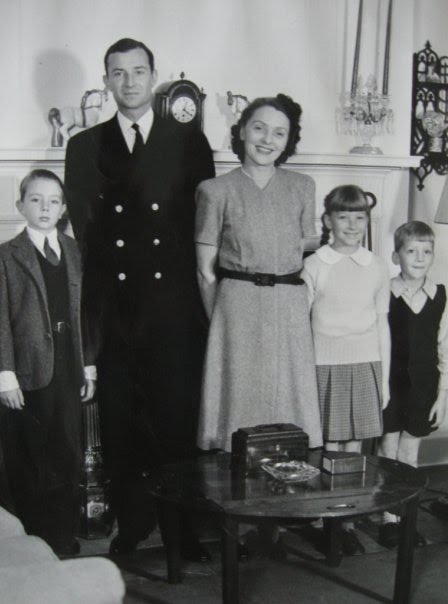
St George Bryan II, J Bryan III, Katharine L Bryan , Joan Bryan , CDBB
FROM ENCYCLOPEDIA VIRGINIA
St George Bryan II, J Bryan III, Katharine L Bryan , Joan Bryan , CDBB
FROM ENCYCLOPEDIA VIRGINIA
Joseph Bryan was a journalist and writer who was born into the influential Bryan family of newspaper publishers and industrialists. He edited and wrote for many national publications, including the family-ownedRichmond News LeaderandChicago Daily Journal, as well as Parade, Time, Fortune, Town and Country, Reader's Digest, the Saturday Evening Post, and the New Yorker. He wrote numerous articles on travel, humor, and celebrities, some of which evolved into books or reappeared as portions of his books. He served in all three branches of the U.S. military: first as a lieutenant in the field artillery of the army following his graduation from Princeton University in Princeton, New Jersey, then in the navy during World War II (1939–1945) as a lieutenant commander assigned to naval air combat intelligence in the Pacific, and later as a lieutenant colonel in the air force. He also worked for the Central Intelligence Agency from the late 1940s until 1953. He lived in Washington, D.C., and at Brook Hill, an ancestral home in Henrico County.
Joseph Bryan was born on April 30, 1904, at Laburnum in Henrico County, the son of Joseph St. George Bryan and Emily Nelson Page Kemp Bryan and a grandson of the preservationist Isobel Lamont Stewart Bryan and of the Richmond industrialist and newspaper publisher Joseph Bryan (1845–1908). Known as Joseph Bryan III throughout his life, Bryan was educated successively at Chamberlayne School (later St. Christopher's School) in Richmond, Episcopal High School in Alexandria, and Princeton University, where he earned a BA in 1927. He edited Princeton's humor magazine, the Princeton Tiger, and was voted most entertaining and most witty man in his class and runner-up for best-dressed man and best-all-around man outside athletics.
Following graduation Bryan and several friends toured Europe, Africa, the Middle East, and India. From 1928 to 1930 he worked as a reporter and editorial writer for the Richmond News Leader and the Chicago Daily Journal, both published by his uncle John Stewart Bryan. The Great Depression made earning a living as a freelancer difficult and forced Bryan into frequent job changes. He was associate editor of Parade magazine in Cleveland in 1931 and 1932, then worked briefly for Time, Fortune, and the New Yorker, and from 1933 to 1937 was managing editor of Town and Country. From 1937 until he resigned in June 1940 Bryan was an associate editor of the Saturday Evening Post.
As a result of his Reserve Officers' Training Corps work at Princeton, Bryan held a commission as a second lieutenant and then lieutenant in the field artillery for several years following his graduation. In January 1942 he was commissioned a lieutenant commander in the navy and assigned to naval air combat intelligence in the Pacific. Reassigned to naval public relations in 1944, Bryant spent much of 1945 aboard the carrier U.S.S. Yorktown. From the late 1940s until 1953 he worked for the Central Intelligence Agency with a concurrent commission as lieutenant colonel in the air force, giving him the unusual distinction of having been an officer in all three major branches of the armed services. In 1953 Bryan was promoted to colonel in the air force reserve. He lived in Washington during World War II and until 1959, when through a complicated family trust he inherited the right to live at Brook Hill, an ancestral home in Henrico County.
As J. Bryan III he wrote about three dozen articles for Collier's, Reader's Digest, the Saturday Evening Post, and the Saturday Review of Literature during the 1930s and 1940s. After leaving government service he resumed his career as a freelance writer. From 1953 through 1974 Bryan wrote about fifty articles for Holiday magazine and numerous pieces for other journals. Other pieces Bryan published in national magazines included biographical works on the Aga Khan, the duke of Edinburgh, Britain's Princess Margaret, and Katharine Hepburn, and in 1965 he wrote a biography of John Armstrong Chaloner for the Virginia Magazine of History and Biography. His only work of fiction, a short story entitled "First Patrol," appeared in Esquire in 1956.
Bryan's principal books included
Mission Beyond Darkness (1945), written with Philip Reed about the U.S.S. Lexington in the South Pacific;
Admiral Halsey's Story (1947), an authorized biography written with William F. Halsey;
Aircraft Carrier (1954), based on a diary Bryan kept while aboard the U.S.S. Yorktown;
The World's Greatest Showman: The Life of P. T. Barnum (1956), written for young readers; and
The Windsor Story (1979), a dual biography of the duke and duchess of Windsor, written with Charles J. V. Murphy. He also published two volumes of short writings.
The Sword over the Mantel: The Civil War and I (1960) features reminiscences and character sketches derived from his youth in Richmond, and
Merry Gentlemen (And One Lady) (1985) contains memorable pen portraits of Fred Allen, Robert Benchley, Dorothy Parker, and other personalities of the Algonquin Round Table who flourished during Bryan's years in New York. His last two books,
Hodgepodge: A Commonplace Book (1987) and
Hodgepodge Two: Another Commonplace Book (1989), reflect his omnivorous reading, his love of travel, and his sense of humor.
Bryan married three times. On October 4, 1930, he married Katharine Lansing Barnes, of New York. They had two sons and one daughter and were divorced in 1954. On February 22, 1960, Bryan married a widow, Jacqueline Vandesmet, viscountess Guy de La Grandière, of Paris. She died on March 8, 1988, and August 28, 1991, he married Elizabeth Mayo Atkinson McIntosh, of Richmond. Joseph Bryan III died of cancer at his home in Richmond on April 3, 1993, and was buried with other family members in the yard of Emmanuel Episcopal Church in Henrico County.
Major Works
•Mission Beyond Darkness (1945), written with Philip Reed
•Admiral Halsey's Story (1947)
•Aircraft Carrier (1954)
•The World's Greatest Showman: The Life of P. T. Barnum (1956)
•The Windsor Story (1979), written with Charles J. V. Murphy
•The Sword over the Mantel: The Civil War and I (1960)
•Merry Gentlemen (And One Lady) (1985)
•Hodgepodge: A Commonplace Book (1987)
•Hodgepodge Two: Another Commonplace Book (1989)Time Line
April 30, 1904 - Joseph Bryan (also known as Joseph Bryan III) is born at Laburnum in Henrico County.
1927 - Joseph Bryan III graduates from Princeton University. While there, he edited Princeton's humor magazine, the Princeton Tiger.
1928–1930 - Joseph Bryan III works as a reporter and editorial writer for the Richmond News Leader and the Chicago Daily Journal, both published by his uncle John Stewart Bryan.
October 4, 1930 - Joseph Bryan III marries Katharine Lansing Barnes, of New York. The couple will have two sons and one daughter but divorce in 1954.
1931–1932 - Joseph Bryan III is an associate editor of Parade magazine in Cleveland, Ohio.
1933–1937 - Joseph Bryan III is managing editor of Town and Country.
1937–June 1940 - Joseph Bryan III is an associate editor of the Saturday Evening Post.
January 1942 - Joseph Bryan III is commissioned a lieutenant commander in the navy and assigned to naval air combat intelligence in the Pacific.
1944 - Joseph Bryan III is reassigned to naval public relations.
1945 - Joseph Bryan III spends much of the year aboard the carrier USS Yorktown.
Late 1940s–1953 - Joseph Bryan III works for the Central Intelligence Agency with a concurrent commission as lieutenant colonel in the air force.
1953 - Joseph Bryan III is promoted to colonel in the air force reserve.
1953–1974 - Joseph Bryan III writes about fifty articles for Holiday magazine and numerous pieces for other journals.
1956 - Joseph Bryan III's only work of fiction, a short story entitled "First Patrol," appears in Esquire.
1959 - Joseph Bryan III moves from Washington D.C. to Brook Hill, an ancestral home in Henrico County.
February 22, 1960 - Joseph Bryan III marries a widow, Jacqueline Vandesmet, viscountess Guy de La Grandière, of Paris.
March 8, 1988 - Joseph Bryan III's second wife, Jacqueline Vandesmet, viscountess Guy de La Grandière, dies.
August 28, 1991 - Joseph Bryan III marries Elizabeth Mayo Atkinson McIntosh, of Richmond.
April 3, 1993 - Joseph Bryan III dies of cancer at his home in Richmond and is buried with other family members in the yard of Emmanuel Episcopal Church in Henrico County.
New York Times Obit
Joseph Bryan 3d, 88, an Author
By MARVINE HOWE
Published: April 06, 1993
Print
Joseph Bryan 3d, an author and editorial writer, died on Saturday at his home, Brook Hill, in Richmond. He was 88.
The cause was cancer, said his wife, Elizabeth Mayo Atkinson McIntosh.
As a lieutenant commander in air-combat intelligence in the United States Navy in World War II, Mr. Bryan saw action in the Southwest Pacific, the South Pacific and the Central Pacific.
His best known book,
"Mission Beyond Darkness" (1945), written with Philip Reed, is a dramatic account of the events and emotions experienced by the gunners and pilots of Air Group 16 aboard the aircraft carrier Lexington in the first battle of the Philippines.
Another account of action in the Pacific,
"Admiral Halsey's Story" (1947), written with Adm. William F. Halsey, first appeared as a series in The Saturday Evening Post. Mr. Bryan's
"Aircraft Carrier" (1954) is a record of life aboard the carrier Yorktown from January through April 1945.
His last work,
"Hodge Podge Two" (1989), is a collection of observations and quotations. Other books include
"The Windsor Story" (1979), about the Duke and Duchess of Windsor.