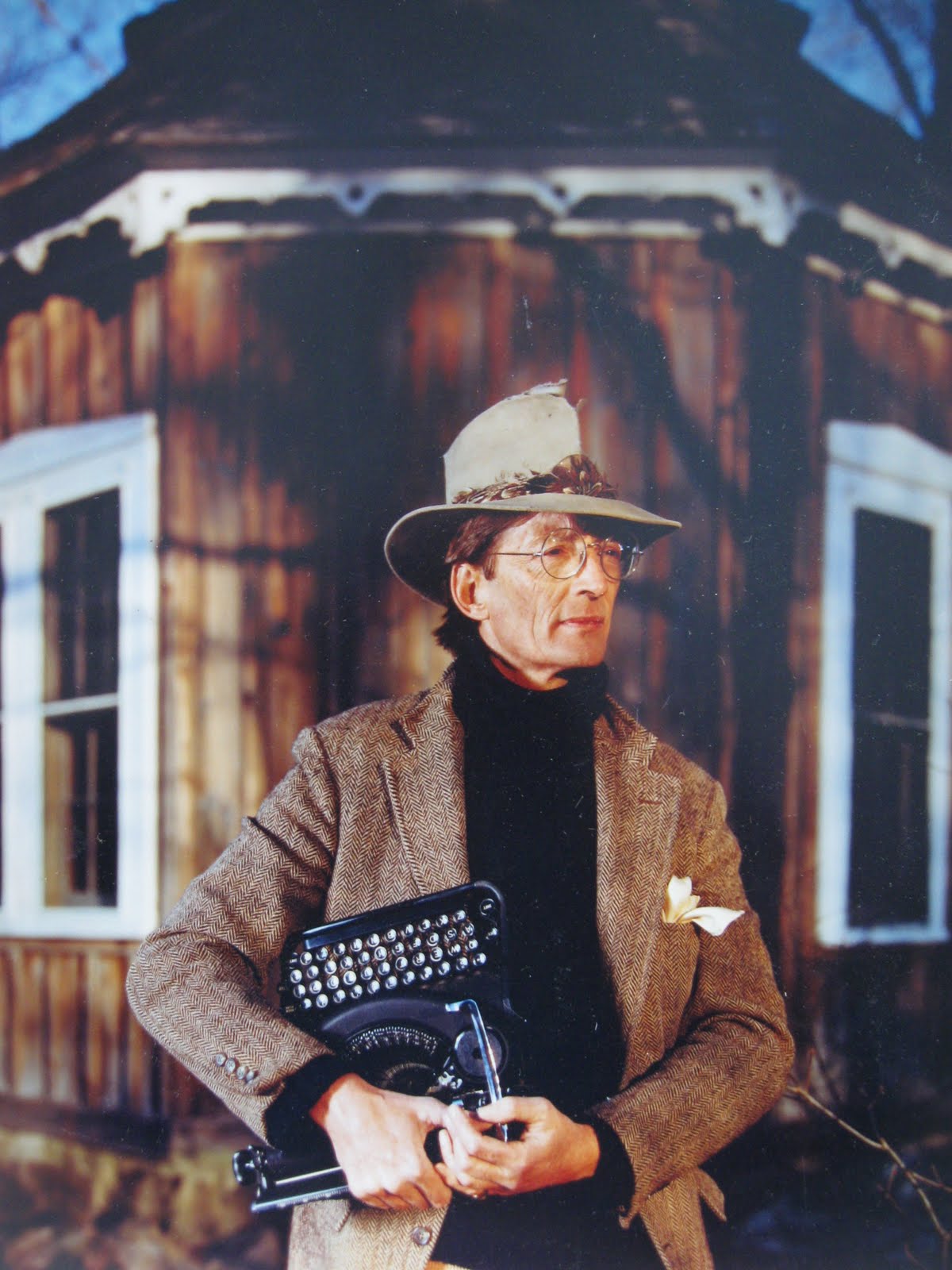
Sunday, December 30, 2012

On The Road to La Porte City, Iowa April 8, 1971


 To pass the time on his way to meet Peg and Gene Mullen for what was a possible New Yorker magazine article and became Friendly Fire , Dad made notes of the journey. He drove 561 miles in a faded yellow Volkswagon bus with an eight track tape player.


THURSDAY MORNING, APRIL 8, 1971

 Leave Guilford 8:30. Mileage 34213. Park at underpass off 95 to settle gear, check maps, gauges. Plucky Lindbergh in a VW bus. The Spirit of St Desperation.
 The sign on the Conn. Tpk: "Are You Dying For A Smoke?" and all the levels of paranoia that appeals to from cancer to marijuana bust.
  Plug Nilsson's "The Point" into the tape deck and heading South on 95 to "Me and My Arrow, straight up and narrow" Swinging into the exact change lane and laying out a 25 cent toll, have travelled this road hundreds, maybe thousands of times but shortly after the New Haven oil spill area, it's off and up 91 to Hartford.


It's 9:20. I've been on the road less than an hour and I miss Sam terribly? How can this be with all the anguish and tension she causes me and I cause her? Listening to Richie Havens on the Woodstock tape going through the outskirts of Hartford. I pass a school bus and a 7 year old boy in the back flashes me a Peace sign.


 An aging Pontiac passes me and its bumper sticker reads "I'm a Polka Fan". The Silent Majority speaks out at last! It's 33 degrees at 9:50 at Springfield. This is where I move onto the Massachusetts Turnpike. The line from James Taylor's song about Stockbridge to Boston. The fantasy of being on the road along Northampton ( Smith College) and Holyoke ( Mt Holyoke) and hitchhiking are two college girls. I pick them up, we get along fine and its mixed doubles in the Holiday Inn. Instead there is one bearded kid hitchhiking to Boston - the wrong way. And I find myself following a bloodmobile. Next fantasy: the truck is hijacked by an upstate colony of vampires who've come, capes flapping, out onto the road. Driven down from the hills by the harsh winter...


Dad drives into New York State, buys a bad meatloaf meal for lunch at Swann's ( for $1.85 + a 25 cent tip) and fills up the bus with 12.3 gallons for $5.10.

  The Erie Canal parallels the road. Lord how that must have been glorious the day the Canal was opened in 1825. Top hats off for Gov Dewitt Clinton, I will see the canal off and on to Buffalo.


  Farther on, on the left, is the town where Beechnut has its huge factories all in a row. Candies, gum, baby foods.


 I pass a sign for Route 233 Westmoreland and that makes me think about Calley. And what is there but to think of the Calley in us all. Was Calley more of a criminal because he killed 22 women and children than me who willingly selected nuclear targets over North Korea. We are both obeying orders. The criminals, surely, are the ones who give the orders as well. Route 233 Westmoreland.

Dad stops for a cup of salty coffee in Leroy, NY and fills up the bus with 12.9 gallons for $5.25. He's now wishing he drove Sam's jaguar. He's noticing an enormous amount of elderly people on the road.

  Fantasy: there is a conspiracy of old people. A secret gathering of them somewhere in the Dakotas. They are going to start a revolution. But of what sort?
  And then I am in the Buffalo area with regiments of high power lines marching out of Niagara Falls...At five o'clock I reach the exit for Niagara and pick up two hitchhikers from Canada. They are young and the one sitting up front is telling me how he likes to ramble around. "Trudeau," he says, "is a very grokky guy."..and out of impulse they've decided to continue onto Ohio where his friend's parents lived.
  I tell them I'm only going as far as Erie. A Toyota with two college girls go by and I tell the boys to make themselves a sign and we will hold it up to the window so that perhaps they can get a ride with the girls. We pass the girls and they blush and mentally cross their legs then write a sign saying they are only going as far as Pittsburgh.


  So I drop the boys and head into the Holiday Inn at the Erie PA South.
   During dinner in their mock-English restaurant I am entertained by "The Whispering Organ of Brad Swanson" and through the grill by the bar I see a powder blue faded blond who, with a surprisingly sweet voices, is joining in on "Everybody Loves Somebody Sometimes..."


   Outside the dining room there was a display of Swanson's three albums. His songs were When You're Smiling, Deep in the Heart of Texas, Quando Quando Quando, Ramblin' Rose, Paper Doll, My Happiness, Satin Doll, Whispering, Gimme a Little Kiss, Will Ya, Huh? Peg O My Heart
  There was a lovely sunset and Lake Erie looked almost clean
I called Sam from my room. And it is true. I did miss her. And Amanda. And even Magoo.
561 miles the first day.


Friday, December 28, 2012

The General


Dad first met H. Norman Schwarzkopf in October 1971. He was then a 37 year old lieutenant colonel not long back from completing his second tour of duty in Vietnam. Twice wounded, he had just been released from Walter Reed Army Medical Center and was recuperating at home with his wife, Brenda, and two year old daughter, Cindy.

 Seventeen months earlier, Schwarzkopf had been commanding the Americal Division's 1st Battalion of the 6th Infantry Brigade in South Vietnam's Batangan Peninsula when a young soldier a dozen yards from Schwarzkopf stepped on a mine. The explosion punched the kid up into the air, injured Captain Bob Trabbert and Schwarzkopf himself. The soldier's right leg was flapping out to one side. "I'm going to die! We're all going to die!" he screamed. As Schwarzkopf began inching across the mine field to reach the soldier, his legs began to shake uncontrollably:

  His knees were suddenly so watery that he had to reach down and grip them until they were stilled. Perspiration stung his eyes. The men watching him, waiting for him to move again. To his astonishment, Schwarzkopf said, he suddenly thought of the sign on Harry Truman's White House desk:"The buck stops here". 
   The kid was whimpering, "I don't want to die! You've got to get me out of here."
    "I'll get you out," Schwarzkopf said. "Just Keep Still. You're all right."
     Five feet...three feet...Schwarzkopf gently lowered himself across the wounded boy's body to keep him still. "I don't want you to move around," Schwarzkopf told him. "We're going to have to set that leg." 
    Schwarzkopf needed a splint and spotted a small, waist-high tree back where he had left Trabbert and three other men. Schwarzkopf called to them to cut some splints from the tree. Trabbert pulled out his sheath knife and passed it to one of the men. The soldier took one step toward the tree and triggered another mine. 
    Schwarzkopf was horrified. Trabbert had taken the full force of the explosion. His left leg was blown off, an arm broken backward so that the bone of the elbow socket showed, and a great hole was gouged in his head. He would survive, but three other men were killed instantly.
     For having crossed the mine field to rescue the wounded private, Schwarzkopf was awarded his third Silver Star. He says he had no other choice, It was his responsibility. And by being there in the mine field taking care of the boy instead of with Trabbert, his life was saved. "But you live with those things, " he said. "You become terribly fatalistic in combat."


Dad had interviewed Schwarzkopf repeatedly for Friendly Fire, a book he wrote about an Iowa family whose son, a sergeant in one of the infantry companies in Schwarzkopf's battalions, was killed by a howitzer shell fired by his own supporting artillery in Vietnam. Another death that deeply distressed Schwarzkopf.

These were some of the experiences that helped Schwarzkopf prepare for Operation Desert Storm command. For a 1991 article that appeared in The New Republic, Dad asked Schwarzkopf if he would be disappointed if his ground forces never got the opportunity to go into battle.

   "Not in the least!" he said vehemently. "I don't want to kill one more American! I don't want to see one more American die-- be it from accident or from battle. There's no blood lust on the part of myself or anybody else around here. What we want to do is accomplish the objectives of this whole thing, get it over as quickly as we can, and get back home. And I tell you, that's the attitude of everybody from the top general down to the lowest private."

Saturday, February 4, 2012

LA Times Interview With Dad (1987)

100 Years of a Living Legend : C. D. B. Bryan Records Growth and History of National Geographic, the Society and the Magazine

November 04, 1987|BETTY CUNIBERTI | Times Staff Writer


WASHINGTON — C. D. B. Bryan, a successful writer of both fiction and nonfiction, had not read the familiar yellow-bordered magazine for 20 years when he agreed two years ago to write a book on the National Geographic Society's 100-year anniversary.

Bryan had, of course, read the National Geographic magazine "as a kid. It was the kind of magazine your grandparents gave you."

Considering the source of the gift, it contained an unbelievable bonus for a young male mind: those pictures of bare-breasted native women.

Trademark Photographs

"It's their trademark," said the 51-year-old Bryan, who is best known for his Vietnam drama "Friendly Fire," about a soldier accidentally killed by his own forces. "Generations of schoolboys have grown up with this pre-Playboy."

In the 1950s and '60s, the Geographic became "bloody boring" in Bryan's estimation. Increasingly in the latter decade, protesting the war in Vietnam began occupying his time, so, bare-breasted women or not, he stopped reading it.

"I would read it when I went to the dentist, like everybody else," he added.

Nonetheless, Bryan agreed to write the book for the Harry N. Abrams publishing company, having already authored a commercially successful book for Abrams on the Smithsonian's Air and Space Museum. Writing about the Geographic would, among other things, give him a financial base to work on a "Friendly Fire"-style account of a real family coping with a teen-age suicide, a book he is still working on.

To Bryan's surprise, not only was "The National Geographic Society, 100 Years of Adventure and Discovery" a lot more work than he had envisioned--two years of interviewing staffers and plumbing through files--but it has already become much more successful than he thought it would. It was released last week with a first printing of 750,000, it was chosen a Literary Guild selection and there are plans for translations and sales in foreign countries.

"None of us in our wildest moments thought it would do this well," Bryan said.

What apparently has proven irresistible is the 473-page collection of dramatic stories and photos of earthquakes, undersea and polar expeditions, volcano eruptions, microscopic cells and the peoples, vegetation and wildlife of foreign lands.


Not Always Flattering

The book also contains Bryan's unauthorized account of the history of the National Geographic Society, which is not always flattering to the main figures: Alexander Graham Bell, who was president of the society in 1898, and three generations of the Grosvenor family who followed him.

"Like every organization, it's filled with fiefdoms and riven with jealousies," said Bryan, who said he admired the society's "courage" in hiring an outsider to write its history. The society, which has had its headquarters here since its founding in January of 1888, gave Bryan complete access to its massive files, and Bryan spent months submerged in them.

Hearing the adventures of the explorers, photographers and writers was an adventure in itself for Bryan, a tall, pencil-thin, academic-looking man with glasses, who does much of his writing in a Guilford, Conn., cottage on Podunk Road.

"I loved 'Raiders of the Lost Ark' so I had sort of a vision of people trooping into the office covered with seaweed, dressed in safari jackets and snake-proof boots," he said. "But in fact they dress rather like members of the Metropolitan Club, in suits and ties for God's sake, very old-fashioned and very gentlemanly and probably more WASP than you would think they might necessarily be."

Despite their Washington-issue apparel, staffers were able to delight Bryan with, as he wrote in the book's introduction, "tales of bandit raids and angry mobs, of walking away from airplane and helicopter crashes, of being flung from boats into icy rapids, of having cameras bitten by crocodiles or retrieved only through tugs-of-war with venomous sea snakes, of surviving shark bites, capricious imprisonments and mysterious fevers."

"Where else but at the society would one learn of free-lance photographer Alan Root, who, while on assignment in Mzima Springs, Kenya, in 1974, was attacked by a bull hippopotamus? 'The next thing I knew,' Root said, 'he had my right leg in his mouth. The hippo then shook me like a rat.' After skin grafts, treatment for gangrene and a month's convalescence in a Nairobi hospital, Root recovered."

The society liked the book enough to give each magazine staff member one as a present and offer a cut-rate edition to its 10.5 million membership, but Bryan said there were disagreements about what went into the book.

"There were things they would rather not have seen in the book, discussions of the racial prejudice of one of the editors, a discussion of their rose-colored-glasses reporting, the confrontation between the very conservative members of the board of trustees and the less conservative and younger editors, and the palace revolution (as it came to be called) in the illustrations department, where they got fed up with funny little issues jam-filled with tiny little pictures."

Current society president and board chairman Gilbert M. Grosvenor, a great-grandson of Alexander Graham Bell, said of the book: "While none of us may be comfortable with everything he says, this volume is the most objective, credible, frank and honest history of the society ever written."

Before the invention of television, the Geographic "was our window on how the rest of the world is," Bryan said. "It was a real public service. It was exciting."

Magazine Milestone

One milestone occurred in the November, 1896, issue, which contained the first photograph of bare-breasted natives to appear in the magazine. They were called "Zulu Bride and Groom," and the article that accompanied the photo stated: "These people are of a dark bronze hue, and have good athletic figures." Another of the most famous Geographic adventure stories of the pre-television era was Comdr. Robert E. Peary's tale of becoming the first man to reach the North Pole in 1909, an expedition partly funded by the Society.

After television began to show the world to itself, the magazine's primary contribution to American culture quickly became the development of color photography, Bryan feels.

"Nobody does it better," Bryan said. "Nobody has poured the amount of money and had the amount of money to pour into experimenting with different kinds of cameras and lenses and lighting equipment."

The magazine's circulation, which doubles as the society membership, went over the 1 million mark in 1930, then dipped during the Depression and rebounded over the million mark again in 1940. In its largest growth period, the circulation rose from 2.5 million in 1960 to 6.9 million in 1970. It hit its peak of 10.7 million in 1980 and has since levelled off to 10.5 million.

Who reads the Geographic?

As Bryan points out: "There can't be 11 million dentists in this country."

Trying to figure out exactly who did read the Geographic, a survey was taken in 1943 and, as Bryan reports in the book, among the 1,199,738 "loyal members" were: 39,543 housewives; 36,816 farmers; 11,715 dentists and dental surgeons; 13,710 executives; 32,589 clerks; 1,557 barbers; 3,000 undertakers; 39 bartenders; 228 politicians; 261 college matrons; 156 masseurs; 114 members of royalty; 15 poets and 3 tropical fish-raisers.

No More 'Rose-Colored Glasses'

The major journalistic criticism of the Geographic over the years, according to Bryan, has been its "rose-colored glasses" reporting, especially of major wars. This stemmed from staffers having to obey the guiding principles of editor Gilbert Hovey Grosvenor, who decreed, among other things that:

"Nothing of a partisan or controversial nature is printed.

"Only what is of a kindly nature is printed about any country or people, everything unpleasant or unduly critical being avoided."

Bryan said one reason for this philosophy was the Geographic's need to stay in the good favor with countries so that staff members (numbering 200) could return. But the modern Geographic, said one staff member, has had the rose glasses off for "10 years," pointing to articles in the March issue on South Dakota's faltering farm economy, in the April issue on global pollution and the May issue on Chernobyl. There also have been memorable photographs of starving African children and Afghan fighters.

The world's largest nonprofit scientific and educational institution, the society has a number of endeavors beside the famous magazine and television specials. It has sponsored more than 3,200 scientific research projects and expeditions, publishes three other magazines, makes maps and classroom teaching aids and has a program to upgrade the teaching of geography in American secondary schools.

"I knew it could not help but be fun to do a book on the National Geographic," Bryan said. "Whether or not it would be worth two years of your life, I didn't know.

"And the answer is, yes, it was worth it."

Saturday, December 31, 2011

Grandpa Joe and The Flip Flap Flooler


Grandpa Joe and Eliza Carter, June 30th 1904


Recently I discovered some typed pages that did not make it into my grandfather's memoir, The Sword Over The Mantel. They include stories of a childhood in which he was raised among servants. All of which comes as a surprise to those of us who only knew him as the very regal "Duke of Richmond".


We all lived at Laburnum when I was a child: Grandfather and Grandmother; Father, Mother and I, the three of my four uncles who weren't yet married; and assorted relatives, friends, servants and dogs. The big old house had room for us all, and there was room around it for stables and barns, gardens and orchards, pastures and cornfields, with blackberry bushes for the summer and chinquapin tress for the fall. Only two miles down the road was the city of Richmond, but it held no attraction for me. I was happy and complete at home.

from The Sword Over The Mantel: The Civil War and I published in 1960.


The grounds as seen from Laburnum, now part of the Richmond Memorial Hospital complex.

Now for the parts that did not make it into the book:

In his day a child under six had no business being in the company of adults, so little Joe would spend his days in the kitchen among the cherished company of his friends the house servants:


My mammies, Mammy Liza, and later Mammy Brown, and still later Mammy Liza's daughter, Mary Stubbs--known only as "Mary Dear"(Mary Dear honored me by christening one of her children "Joseph Bryan Third Stubbs."); the cook, Mammy Charlotte Ross; the butler, George Robinson; the parlormaids, Skinker and Lea; Mother's maid, Lily; the butler "Daddy George".

I took my meals downstairs in the basement-kitchen, with the house servants, although as a special treat--on my birthday, say--I'd be allowed to have supper upstairs at the Big Table. Mother told me that just before one such treat, I proudly announced to my usual eating companions, "Tonight, I'm going to eat with the White Folks!"

From table talk he picked up a new phrase that led to a spanking when I heard one of them describe another as 'nothin' but a nappy-headed fiel' han'. I was impatient for an opportunity to use the phrase, although I had no idea what it meant. The opportunity came soon, in the form of Lily, who promptly reported me to Mother, who as promptly gave me six of the best with the back of her hairbrush, It was repousse silver, I remember, and Mother assured me that for hours afterwards my stinging bottom bore the imprint of Cupids and rosebuds.

The chauffeur Johnny Mines, "a tall, handsome Negro who might have been the twin brother to the Cream of Wheat man" was a family favorite.

Everybody liked Johnny , but my brother and I loved him. He taught us to drive a car and to shoot a rifle. More than that, he was our friend and confidant. I was thirteen when I went off to boarding school
(at Episcopal High School) and I stayed so wretchedly homesick for so long that Johnny used to write me letters of comfort. They came in pink envelopes addressed in indelible purple pencil which he would lick before printing each laborious word:

Mister. Joe. Bryan.
Apisabel. High. School.
Alexander. V.A.

When he was in especially high spirits, he would recite a poem about an old Negress going to "de sto'" to buy a palm-leaf fan. She can't make the storekeeper understand what she wants. Finally she tells him in desperation

It's a flip-flap-flooler
Summertime cooler
Good Gawd A-mighty, man
Don't you know?
It's one of 'em things
That goes jes so

Whenever he told us about something that had surprised him, he always said. "Ah say to mahse'f. 'Uh-hi! What dis heah?"

My brother and I still say it, in tribute to Johnny.


Years passed before I purged the Negro locutions from my speech--not all of them; I'm still likely to say, "He don't." But at my worst I was never as ungrammatical as my six-years-younger brother, Lamont. Even up to prep school, he talked like a parody of Amos and Andy.


With important guests in the next room, including a former British Prime Minister, Lamont was heard arguing with his cousin John Stewart ,Jr

"Unc' Stewart," he said hotly, "John Stewart claim Jack Dempsey can lick a gorilla. I claim he ain't!"

Sunday, October 2, 2011

Dad's Advice to Writers (1997)


From two different letters written in 1997:

I like Milan Kundera's line. "To be a writer does not mean to preach the truth, it means to discover a truth." Of course my favorite line about writing is from W.B. Yeats: "Only that which does not teach, which does not cry out, which does not condescend, which does not explain, is irresistible"" I have that framed next to my desk -- along with the Moliere quote: "Writing is like prostitution: First you do it for the love of it, then you do it for a few friends, and finally you do it for the money." The best advice I've ever come across for writers is from J.D. Salinger's vastly under-appreciated short story "Seymour: An introduction." It was included in one of Seymour Glass's letters to his brother Buddy: "If only you'd remember before you sit down to write that you've been a reader long before you were ever a writer. You simply fix that in your mind, then sit very still and ask yourself, as a reader, what piece of writing in all the world Buddy Glass would most want to read if he had his heart's choice. The next step is terrible, but so simple I can barely believe it as I write it. You sit down shamelessly and write the thing yourself. I won't even underline that. It's too important to be underlined. Oh, dare to do it Buddy! Trust your heart."

...It sounds so simple doesn't it? It isn't of course, because no writer gets it right the first time through. No one said writing is easy. Nor is rewriting and rewriting, again and again, until your text reads as if it hadn't been written at all, but rather as if the proper words just appeared marching in their proper sequence like good little soldiers on after another, from sentence to paragraph to chapter to book. And how an author weaves those words together is what we think of as that writer's style, which is another way of saying his or her voice.

Sunday, September 25, 2011

George Ford Morris

My grandfather Kent Miller aboard Comforter with Mom running beside them

In his day there was no finer American equestrian artist than George Ford Morris (1873-1960). By painting horses, riders and their owners, Morris captured on canvas the ever-changing world of "Town and Country" Americana. His paintings, featured in the 1952 book Portraitures of Horses, are as popular as ever, selling for as much as $25,000 in auctions.


In the early 1940's Morris visited my mother's home in Aiken, South Carolina. Her father, Kent Miller,and mother, Theodora, were hoping to get some lessons from the famous artist.

a composition study by George Ford Miller

This I finally consented to do, to the extent of allowing them to work two half days a week in my studio, during which time I would give them as much help and criticism as I could while continuing my own work. Although Mrs. Miller's chief object in trying to draw horses was, I believe, to avoid as much as possible being deprived of her husband's company while he was engaged in his art work, nevertheless, it turned out that she could draw horses so much better and with so much less effort than he could that he was forced to the stark conclusion, if his wife was a better artist than himself, he had better try to make his living in some other way, and I inwardly approved of his decision.
-George Ford Morris


Kent was a strapping, graceful figure of a man on a horse, and his first love before his marriage had been Saddle-Horses, of which he owned three well bred ones when I met him... - GFM


But in Aiken my grandfather's fancy turned to Thoroughbreds.His newest acquisition was a horse named Comforter which he entered in some some of Aiken's amateur chases. The horse failed to race well, but my grandfather met a famous owner of Steeplechase horses, Thomas Hitchcock.
When Hitchcock died, my grandfather bought a small racy looking horse from the Hitchcock stable. Veteran steeplechase men were amused by the persistence with which my grandfather trained the horse.

Elkridge and my grandfather

It was not long however, before little Elkridge and his amateur handler began to astonish them. In 1946, Elkridge won the Grand National at Belmont. (Elkridge would win 31 of 123 starts and be elected to the Hall of Fame in 1966.) Stablemate War Battle won the Temple Gwathmey. The sporting press declared Elkridge the ranking steeplechaser of 1942 and 1946. War Battle won the title in 1947.

Another evidence that goes to show what youthful genius coupled with earnest endeavor can accomplish in this tough and ofttimes cynical old world.-GFM


Recently I received a photograph from Morris's great nephew who lives in Seattle. It's an 11 X 14 painting of Elkridge, finished but for the rider and saddle which are penciled in. Small world.

Saturday, September 17, 2011

Uncle Saint in Hawaii: Dolphin Stampede


After two days in dry dock refitting the hull and keel, Uncle Saint and his companions set off for Tahiti once again. For two days they had fabulous sailing in their 33 foot boat, then heavy swells.
The days and nights began to merge with one another.

There was one night, however, which I shall never forget. I was standing watch, alone, about 2 AM. There wasn't a breath of air and, for once, the sea was glassy calm. Although all possible sail was up, we were "ghosting", or standing practically still. In memory of Dr. Van der werff I was actively engaged in "sokuten kyoshi" ( self-detachment in pursuit of heaven), when far off in the distance I heard the rhythmic sound of breakers. I knew we were nowhere near land, so I assumed a major squall was approaching and lowered the main.

The noise drew closer and closer but there was still no breath of wind and, I swear to God, I thought we were going to be hit by a tidal wave. I was about to go below to waken the others when the sea around us literally erupted with the bodies of over a thousand porpoises. They leaped and cavorted in absolute perfect unison - and the full moon reflecting off their flashing eyes and phosphorescent wake made it seem like we were surrounded by an underwater Milky Way.


The came so close to the boat I could have touched them --indeed, some of them actually nudged us ( I found out later they do this to rub the barnacles, etc, off their backs). There is no way in the world to describe this spectacle. I thought, afterwards, that they were like violin players in a symphony orchestra - performing the most incredible tricks while bowing in perfect unison. But a symphonic score lacks the sweeping grand loneliness of the ocean, and violin players lack the grace and power of porpoises. I sat there for an hour after they had gone, drenching wet and shaking. I could not think. "Vot comes to mind?"


After the night the ocean "exploded in his face" Uncle Saint and his passengers drifted into the full-scale doldrums. Someone tossed a paper plate overboard and watched it drift forward and out of sight. The decision was made to return to Hawaii where Uncle Saint helped his old friend John Honl with his charter marlin boat business. He moved into a small apartment with roommates and cockroaches.

I won't say we had a lot of cockroaches, but one morning I found an albino and this only happens once in 10,000,000 births!

I missed living in the yacht harbor though. The life, sights and sounds there were other worldly. I love to watch the tall masts rocking back and forth--scribbling the sky, The long drawn out belching sounds of the mooring lines as the boats strain against the docks. The incredible array of ragamuffin animals...so I shipped out again and went back to Kona where I have spent the last week diving for slate-urchin spines.


The price is $50 per thousand and I have 6,000 of them in a big reeking sack at my feet. The wind has picked up a little and it's my turn at the wheel,Ma. We'll be back in time for the surfing championships and I am entered.